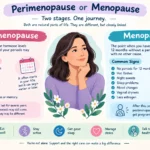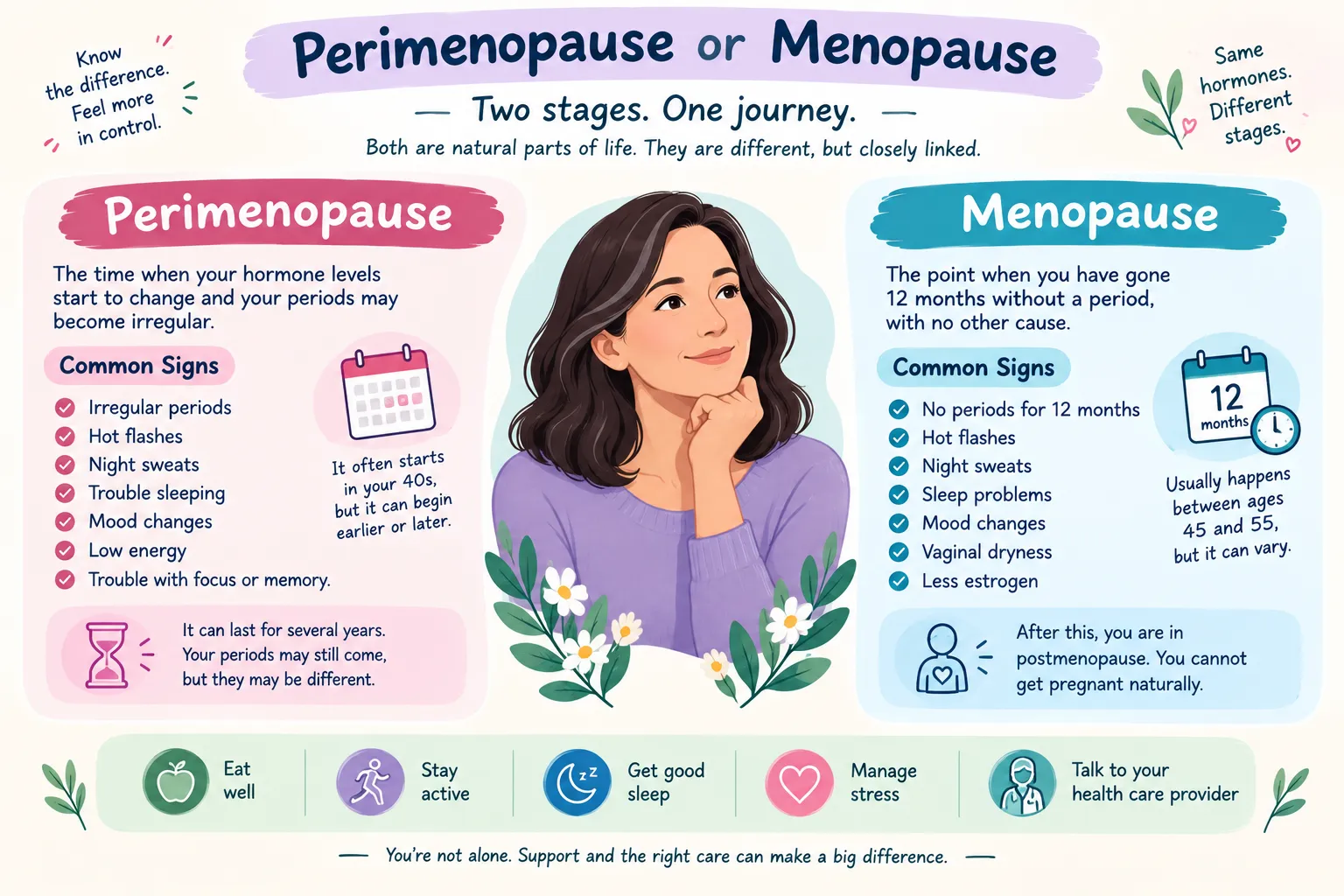
Perimenopause is the time when your body starts to change before menopause. Menopause begins after you have gone 12 months in a row without a period.
Have your periods changed? Do you wake up hot at night? Do you feel tired or moody for no clear reason?
These changes can leave you with many questions. You may wonder if you are in perimenopause or menopause.
Both are parts of the same life change. But they do not mean the same thing.
During perimenopause, your hormone levels go up and down. Your periods may change. You may also have hot flashes, poor sleep, or mood changes.
Menopause is the point when you have gone 12 months without a period. There must be no other cause for the change.
Every person has a different story. Some have many symptoms. Others have few or none. The good news is that help is available.
This guide will help you learn the signs, know the main changes, and find ways to care for your health.
What Is Perimenopause?
Perimenopause is the stage before menopause. It is the time when your body starts to change.
Your hormone levels rise and fall. This can affect your periods, sleep, mood, and body heat.
Perimenopause often starts in your mid-40s. But it can start sooner or later. It may last from 2 to 8 years.
You may notice signs such as:
- Periods that come at new times
- Hot flashes
- Night sweats
- Trouble sleeping
- Low energy
- Mood changes
- Trouble with focus or memory
Also read more about:https://syntexra.com/crunchyroll-or-funimation/
What Is Menopause?
Menopause is the point when you have had no period for 12 months in a row. A health care provider may check for other causes.
Most people reach menopause between ages 45 and 55. Some reach it sooner.
After menopause, you cannot get pregnant through natural ovulation. But you should ask your health care provider when it is safe to stop birth control.
Menopause is not a disease. It is a normal part of life.
Some people feel well after their periods stop. Others still have hot flashes, poor sleep, or vaginal dryness. These signs may last for years.
Perimenopause or Menopause: Main Differences
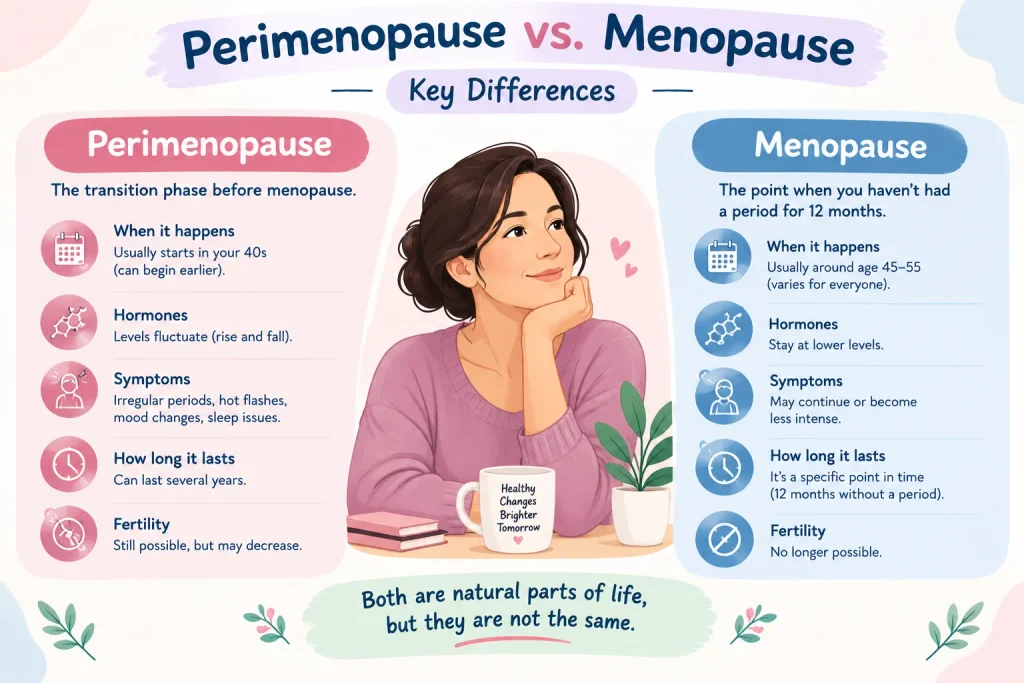
Here are the main ways these two stages differ.
| Perimenopause | Menopause |
|---|---|
| It is the time before menopause. | It is the point reached after 12 months without a period. |
| Periods may change. | Periods have stopped. |
| Hormone levels may rise and fall. | Estrogen levels are often lower. |
| Symptoms may start or change. | Symptoms may stay or change. |
| Pregnancy may still be possible. | Natural pregnancy is no longer expected. |
| It may last for years. | It is a point in time. |
The key thing to know is this: perimenopause is a stage, while menopause is a point in time.
What Are the Signs of Perimenopause and Menopause?
Many signs can happen during both stages. This is why it can be hard to tell them apart.
1. Changes in Your Period
Your period may come early or late. It may also be lighter or heavier than before.
2. Hot Flashes
You may feel a sudden wave of heat. Your face, neck, or chest may feel hot. You may also sweat.
3. Night Sweats
You may wake up with wet clothes or sheets. This can make it hard to sleep well.
4. Trouble Sleeping
You may find it hard to fall asleep. You may wake up many times at night.
5. Mood Changes
You may feel sad, worried, or upset more often. Some people feel unlike themselves.
6. Low Energy
You may feel tired even after rest. Poor sleep can make this worse.
7. Trouble With Focus
You may find it hard to focus or recall a word. Some people call this “brain fog.”
8. Vaginal or Bladder Changes
You may have vaginal dryness or pain during sex. You might also need to pee more often.
Keep in mind that not everyone has all these signs.If a change worries you, speak with a health care provider.
How Long Does Perimenopause Last?
Perimenopause can last from 2 to 8 years, but the time can vary.
Some people have mild changes for a short time. Others have signs that last longer.
After menopause, some signs may fade. Others may stay or get worse. Hot flashes, for example, can last for years.
There is no set time that fits everyone.
Can You Get Pregnant During Perimenopause?
Yes. You may still get pregnant during perimenopause.
Your periods may be uneven, but your body may still release an egg. This means pregnancy can still happen.
After natural menopause, you can no longer get pregnant through natural ovulation.
If you do not want to get pregnant, ask your health care provider about birth control. They can help you learn when it is safe to stop.
How Do Doctors Know Which Stage You Are In?
Your health care provider may ask about your age, periods, and signs.
They may ask:
- When did your last period start?
- Have your periods changed?
- Do you have hot flashes or night sweats?
- Are you having trouble sleeping?
- What medicines or health products do you use?
You may need tests to check for other causes of your signs.
A hormone blood test is not always useful. Hormone levels can change a lot during perimenopause. One test may not give a clear answer.
Keep a simple record of your periods and signs. Bring it to your visit. It can help you explain what is going on.
How Can You Feel Better?
You do not have to face these changes alone. There are ways to care for your body and mind.
Eat Well
Eat a mix of healthy foods. Foods with calcium and protein can help support your bones and muscles.
Move Your Body
Try walking, stretching, or other forms of exercise. Choose things that fit your needs and health.
Build a Sleep Routine
Try to go to bed and wake up at the same time each day. Make your room calm and cool.
Track Your Signs
Write down your periods, sleep, mood, and hot flashes. Note what makes you feel better or worse.
Ask for Help
Tell your health care provider how the signs affect your daily life. Ask about care that fits your needs.
What Treatments Can Help?
The best care depends on your signs, health, and needs.
Your health care provider may talk with you about:
- Changes to daily habits
- Menopause hormone therapy
- Medicines that do not use hormones
- Care for vaginal dryness or pain
- Help with sleep or mood
Hormone therapy can help some people. It is not right for everyone. Your provider can explain the good points and risks.
Be careful with herbs and other products that claim to cure symptoms. “Natural” does not always mean safe. Ask a health care provider before you use them.
When Should You See a Doctor?
Make an appointment if your signs affect your sleep, work, mood, or daily life. You can also ask for help if you are not sure what stage you are in.
Bleeding after 12 months without a period needs medical care. Do not ignore it.
Get urgent help for heavy or ongoing bleeding, especially if you feel weak, dizzy, or have severe pain.
Possible Questions
Is perimenopause the same as menopause?
No. Perimenopause is the stage before menopause. Menopause is reached after 12 months without a period, when there is no other cause.
What age does perimenopause start?
It often starts in the mid-40s. But it can start earlier or later.
Can perimenopause affect sleep?
Yes. Hot flashes, night sweats, and other changes may make sleep hard.
Do all people have hot flashes?
No. Some people have hot flashes. Others have few signs or none.
Can signs last after menopause?
Yes. Some signs may last for years after periods stop.
Is menopause a disease?
No. Menopause is a normal life stage. But some signs may need care.
Can I treat these signs on my own?
Healthy habits may help. But if signs worry you or affect daily life, talk with a health care provider before trying medicines or supplements.
Conclusion
Perimenopause and menopause are linked, but they are not the same. Perimenopause is the time when your body starts to change. Your periods may become uneven, and you may have hot flashes, poor sleep, or mood changes.Menopause is reached after 12 months in a row without a period, when no other cause explains the change.There is no single way to go through this stage. Some people have many signs. Others have few. Your age alone cannot tell you what is happening in your body.You can take small steps to care for yourself. Eat well, stay active, track your signs, and try to get good sleep. If your signs affect your life, ask your health care provider about ways to help.You do not need to feel ashamed or face these changes alone. Good care starts with clear facts and open talks. With the right support, you can make choices that fit your needs and help you feel better.

Eman Sarfraz is a professional content writer, researcher, and English language specialist with strong expertise in English grammar, vocabulary, word meanings, synonyms, and antonyms. I creates well-researched, accurate, and easy-to-understand content that helps readers master English concepts and communicate with greater confidence.