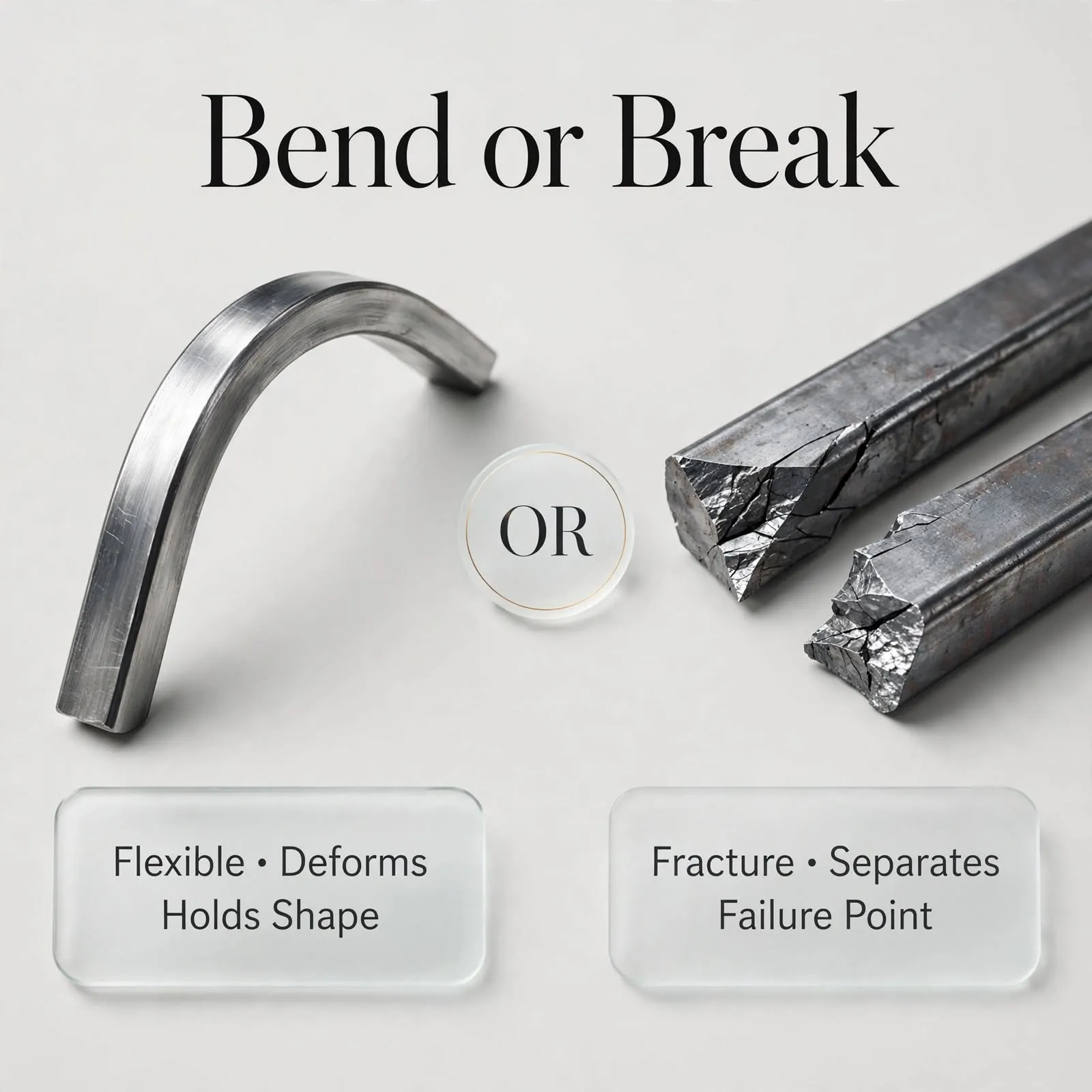
“Bend” means to curve or change, while “break” means to split, damage, or stop.Imagine a small tree in a strong wind. The tree moves from side to side. Its branches bend. If the wind becomes too strong, a branch may break. This simple example shows the main difference between bend or break.The word bend means to curve something or move it from a straight shape. We can also use it for rules, roads, and people. For example, we can bend the rules or bend our knees.
The word break has many meanings. It can mean to split something, damage it, stop it, or take a rest. We can break a glass, break a rule, or take a break from work.People search for bend or break because these words can be used in many ways. The phrase can also have a deeper meaning. It can describe a choice between changing and giving in, or staying strong until something fails.So, bend or break is not only about physical objects. It can also describe rules, people, feelings, and hard times.
Pronunciation of Bend and Break
Bend
- US: /bend/
- UK: /bend/
- Easy sound: BEND
Example:
“Bend your knees.”
Break
- US: /breɪk/
- UK: /breɪk/
- Easy sound: BRAYK
Example:
“Do not break the glass.”
The words have different sounds and different meanings.
Difference Between Bend or Break
1. Basic Meaning
Bend means to curve something.
Examples:
- “Bend the wire.”
- “The tree bends in the wind.”
Break means to split or damage something.
Examples:
- “Do not break the glass.”
- “He broke the stick.”
2. Change in Shape
When something bends, it changes shape but may stay whole.
Examples:
- “She bent the paper.”
- “The branch bent down.”
When something breaks, it may split into pieces.
Examples:
- “The stick broke.”
- “The plate broke.”
3. Damage
Bending does not always cause damage.
Examples:
- “The rubber can bend.”
- “The soft wire can bend.”
Breaking often means damage.
Examples:
- “I broke my phone.”
- “The chair broke.”
4. Body Movement
We often use bend for body movement.
Examples:
- “Bend your knees.”
- “He bent down.”
We can use break when a body part is injured.
Examples:
- “She broke her arm.”
- “He broke his leg.”
5. Rules
Bend the rules means to change a rule a little.
Examples:
- “They bent the rules.”
- “He bent the rule to help her.”
Break the rules means to do something against the rules.
Examples:
- “He broke the rule.”
- “Do not break the law.”
6. Roads and Paths
A road can bend when it curves.
Examples:
- “The road bends left.”
- “Slow down at the bend.”
We do not normally use break to describe a road curve.
Examples:
- “There is a sharp bend ahead.”
- “The road bends near the bridge.”
7. Rest
Bend does not mean rest.
Examples:
- “Bend your back.”
- “Bend your knees.”
Break can mean a short time to rest.
Examples:
- “Let’s take a break.”
- “I need a short break.”
8. Machines and Objects
A machine can break when it stops working.
Examples:
- “My phone broke.”
- “The washing machine broke.”
We normally use bend when an object changes shape.
Examples:
- “The metal bent.”
- “The wire bent.”
9. People and Feelings
Bend can suggest that a person changes or gives in.
Examples:
- “He would not bend.”
- “She bent to their wishes.”
Break can suggest that a person loses strength.
Examples:
- “The stress broke him.”
- “The bad news broke her heart.”
10. Strength
Something that bends may stay strong and whole.
Examples:
- “The tree bends in the wind.”
- “The rubber band bends easily.”
Something that breaks can no longer stay whole.
Examples:
- “The glass broke.”
- “The dry branch broke.”
Nature and Behaviour of Bend or Break
Nature of Bend
Bend is often about shape, movement, or change.
It can be physical.
Example:
“The boy bent his arm.”
It can also be about rules.
Example:
“They bent the rules.”
It can also describe a person who changes or gives in.
Example:
“He bent to their wishes.”
The main idea is change or movement without complete failure.
Nature of Break
Break has many meanings.
It can mean to split something.
Example:
“She broke the cup.”
It can mean to stop working.
Example:
“My phone broke.”
It can mean to rest.
Example:
“Let’s take a break.”
It can mean to go against a rule.
Example:
“He broke the law.”
It can also describe emotional pain.
Example:
“The news broke her heart.”
Why People Get Confused About Bend or Break
People get confused because both words can describe change.
Think about a tree.
The tree may bend when the wind starts.
If the wind becomes too strong, the branch may break.
So the easy rule is:
Bend = curve or change shape.
Break = split, damage, or stop.
The words can also have a deeper meaning.
For example:
- “She will bend to pressure.”
- “She will break under pressure.”
Also read more about:https://syntexra.com/phuket-or-krabi/
Comparison Table
| Point | Bend | Break |
|---|---|---|
| Main meaning | Curve or change | Split, damage, or stop |
| Shape | Changes shape | May split |
| Damage | Not always | Often means damage |
| Body | Bend your knee | Break your arm |
| Rules | Bend the rules | Break the rules |
| Road | A road bends | Not used for a road curve |
| Rest | Not used this way | Take a break |
| Machine | Less common | A machine can break |
| Feelings | Can mean giving in | Can mean emotional pain |
| Past form | Bent | Broke |
| Past participle | Bent | Broken |
The Origin of Bend or Break
Both bend and break are old English words.Bend comes from Old English bendan. The word was linked to the idea of bending or stretching something.Break comes from Old English brecan. It was linked to splitting or damaging something.Over time, both words gained many uses.Today, bend can describe objects, roads, body movements, rules, and people.Break can describe objects, rules, machines, rest, news, promises, and feelings.This is why these two short words are useful in many types of English.
British vs American English
There is no major spelling difference between British and American English.
Both use:
- bend
- bent
- break
- broke
- broken
Examples:
American English:
- “Bend your knees.”
- “I broke my phone.”
British English:
- “Bend your knees.”
- “I broke my phone.”
The words are also pronounced in almost the same way in both forms of English.
So English learners do not need a different spelling for the US and UK.
Which One Should You Use?
For US English
Use bend when something curves or changes shape.
Use break when something splits, gets damaged, stops working, or ends.
For UK English
Use the same rule.
Examples:
- “Bend the wire.”
- “Break the glass.”
For Global English
The same rule is easy to follow.
Remember:
Bend = curve.
Break = split or stop.
These meanings are clear to English speakers around the world.
Common Mistakes
Mistake 1: Using “Break” for Knee Movement
Wrong:
“Break your knees.”
Correct:
“Bend your knees.”
Mistake 2: Confusing “Bend” and “Break” the Rules
Bend the rules means to change or stretch a rule.
Break the rules means to go against the rules.
Mistake 3: Using “Break” as the Past Form of Bend
Wrong:
“I break the wire yesterday.”
Correct:
“I bent the wire yesterday.”
Mistake 4: Using “Breaked”
Wrong:
“He breaked the glass.”
Correct:
“He broke the glass.”
Mistake 5: Using “Bended” as the Normal Past Form
The normal past form is bent.
Correct:
“The metal bent.”
Everyday Usage Examples
In Emails
“Please bend the paper along the line.”
“I need a short break before the meeting.”
On Social Media
“This tree can bend in strong wind.”
“I need a break from social media.”
In News
The word break is often used when news becomes known.
Example:
“The news broke early this morning.”
The word bend can describe a road or object.
Example:
“The road bends near the bridge.”
In Formal Writing
Both words are useful in formal writing.
Examples:
“The metal can bend under pressure.”
“The material may break under heavy force.”
Usage Trends
Both bend and break are common English words.
Break has more meanings than bend. It can describe objects, rules, work, news, rest, promises, and feelings.
Bend is often used for shape, movement, roads, rules, and change.
The phrase bend or break is also used in a wider way. It can describe what happens when someone faces pressure.
A person may change to deal with a problem. Or the pressure may become too much.
This idea makes the phrase useful in everyday speech, books, songs, and titles.
Metaphors and Similes
Bend Like a Tree
This can describe someone who can change when life becomes hard.
Example:
“She bends like a tree in the wind.”
It suggests that she can adapt.
Break Under Pressure
This means someone cannot handle more pressure.
Example:
“He broke under pressure.”
Bend the Rules
This means to change a rule a little.
Example:
“The coach bent the rules for the young player.”
Break the Ice
This means to make people feel more relaxed.
Example:
“John told a joke to break the ice.”
Connotative Meaning
Bend — Positive Meaning
Bend can suggest flexibility.
Example:
“She can bend with change.”
This can be a good quality.
Bend — Negative Meaning
It can also suggest giving in.
Example:
“He always bends to other people’s wishes.”
Break — Positive Meaning
Break can suggest freedom or a new start.
Example:
“She broke free from fear.”
Break — Negative Meaning
It can suggest damage or failure.
Example:
“The pressure broke him.”
Neutral Meaning
Both words can have a simple physical meaning.
Examples:
- “The stick bent.”
- “The stick broke.”
Idioms and Proverbs
Bend Over Backwards
This means to try very hard to help someone.
Example:
“She bent over backwards to help her friend.”
Bend the Rules
This means to change a rule a little.
Example:
“The teacher bent the rules for the student.”
Break the Ice
This means to make people feel comfortable.
Example:
“He told a joke to break the ice.”
Break a Leg
This is a phrase used to wish someone good luck before a show.
Example:
“She told the actor, “Break a leg!””
Break the Bank
This means something costs too much.
Example:
“This phone will not break the bank.”
Literature and Movies
The words bend and break appear often in books and movies because they can describe both physical action and hard life choices.
Bend or Break Series
There is also a book series called Bend or Break by Amy Jo Cousins.
Goodreads lists seven primary works in the series. The first book is Off Campus, published in 2014. Other books include Nothing Like Paris, The Girl Next Door, Level Hands, Real World, Love Me Like a Rock, and Hard Candy.
The series is listed as a New Adult romance series. The title uses the idea of bending or breaking in a wider, personal sense.
Bend It Like Beckham
Bend It Like Beckham is a 2002 sports comedy-drama directed by Gurinder Chadha.
The word “bend” in the title refers to making a football curve in the air.
This is a good example of how bend can be used in sports.
Other Uses of the Title
Bend or Break is also used as a title for other works.
For example, Gunsmoke Games has a game called Bend Or Break on itch.io. The page identifies it as a game by Sunsetriders7 and says the game is free with optional support for the developer.
This shows that bend or break is a flexible phrase. It can be used for books, games, stories, and other creative works.
Why This Difference Matters
Learning the difference between bend and break helps you speak and write clearly.
A small word change can change the meaning.
Compare:
“Bend the stick.”
This means curve it.
“Break the stick.”
This means damage or split it.
The same idea works with rules.
“Bend the rules” sounds softer.
“Break the rules” sounds stronger.
For English learners, knowing this difference can prevent simple mistakes.
Usefulness in Daily Life
You can use bend and break every day.
Use bend when talking about:
- Your knees
- Your back
- A road
- A tree
- A wire
- A rule
Use break when talking about:
- Glass
- Phones
- Bones
- Rules
- Promises
- Rest
- News
- Machines
- Hearts
Situational Preference
Use bend when something curves, turns, or changes shape. You can bend your knees, bend a wire, or bend a rule. Use break when something splits, gets damaged, stops working, or ends. You can break a glass, break a phone, break a rule, or take a break from work. When we talk about people, bend can show that someone can change or give in. Break can show that someone has reached a limit. When you are unsure, remember the simple rule: bend means curve or change, while break means split, damage, stop, or end.
Possible Questions
1. What is the difference between bend and break?
Bend means to curve or change shape. Break means to split, damage, stop, or end.
2. What does “bend or break” mean?
It can describe a choice between changing and failing. It can also describe how someone deals with pressure.
3. Is “bend or break” an idiom?
It can work as a phrase with a figurative meaning. The exact meaning depends on the sentence.
4. What is the past tense of bend?
The past tense is bent.
Example:
“I bent the wire.”
5. What is the past tense of break?
The past tense is broke.
Example:
“I broke the glass.”
6. Can we say “bend the rules”?
Yes.
It means to change or stretch a rule a little.
7. Can we say “break the rules”?
Yes.
It means to do something against the rules.
Conclusion
The words bend and break are simple but useful English words that we use in everyday life. Bend means to curve, turn, or change shape without necessarily causing damage. For example, you can bend your knees, bend a wire, or bend with the wind. Break, however, usually means to split, crack, damage, stop working, or end. You can break a glass, break your phone, break a bone, or take a break from work. We can also use break when talking about rules, promises, or feelings. The phrase bend or break can have a deeper meaning, suggesting that someone or something may need to adapt when facing pressure or difficult situations. In simple terms, bend means to curve or change, while break means to split, damage, stop, or end. Both words are common in American and British English and are easy to use once you understand the difference.

Eman Sarfraz is a professional content writer, researcher, and English language specialist with strong expertise in English grammar, vocabulary, word meanings, synonyms, and antonyms. I creates well-researched, accurate, and easy-to-understand content that helps readers master English concepts and communicate with greater confidence.










1 thought on “Bend or Break: Meaning, Difference, Examples, and Uses”