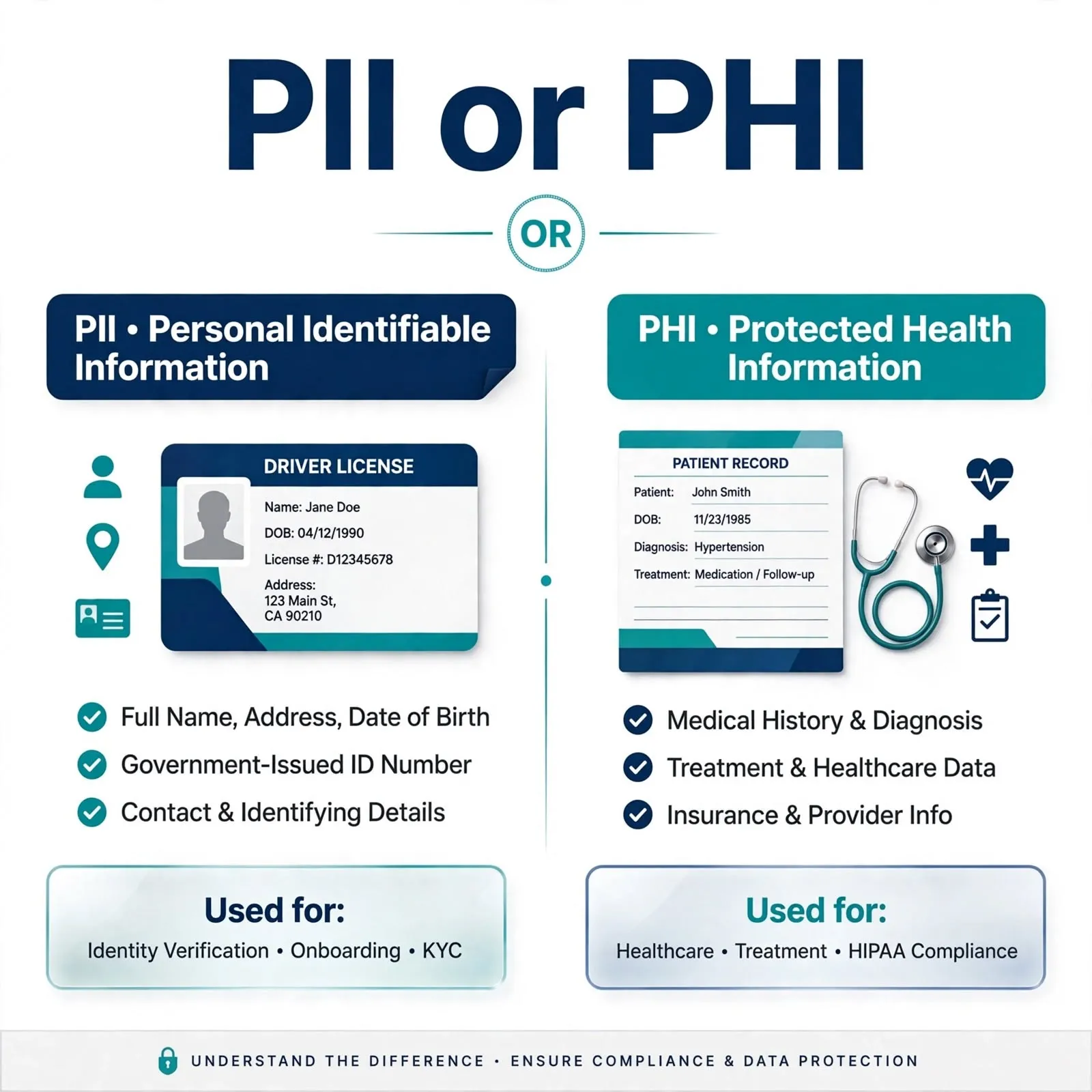
We use the terms PII or PHI when we talk about private information. Both types of information can tell us something about a person.PII means Personally Identifiable Information. It is information that can help identify a person. A name, phone number, email address, and home address can be PII.
PHI means Protected Health Information. It means health information that links to a person. Medical records, test results, and treatment details can be PHI.PII and PHI are not the same. However, they can sometimes overlap. Learning the difference can help people keep private information safe.
What Does PII Mean?
PII stands for Personally Identifiable Information.
It means information that can identify a person. People can use this information alone or with other details to find out who someone is.
Common examples of PII include:
- Full name
- Phone number
- Email address
- Home address
- Date of birth
- ID number
- Passport number
- Driver’s license number
For example, your full name is personal information. Your phone number is also personal information.
People can find PII in many places. A school may have PII about its students. A company may have PII about its workers. A website may collect PII from its users.
What Does PHI Mean?
PHI stands for Protected Health Information.
It means health information that links to a person. This may include information about a person’s illness, doctor visits, tests, or treatment.
Examples of PHI include:
- Medical records
- Test results
- Doctor notes
- Health history
- Treatment details
- Medicine information
- Hospital records
- Insurance information
For example, a person’s test result may be PHI. A record of a doctor’s visit may also be PHI.
Also read more about:https://syntexra.com/bend-or-break/
PII or PHI: What Is the Difference?
The main difference is simple.
PII is personal information.
PHI is health information that links to a person.
PII can tell us who a person is. PHI can tell us about that person’s health.
For example:
PII: John Smith john@email.com 123 Main Street
PHI: John Smith had a blood test. His test showed high blood sugar.
The first group is PII. The second group is PHI.
There can also be some overlap. A patient’s name is PII. If a health provider links that name to medical information, it may also be part of PHI.
Common Examples of PII
You can find PII in everyday life.
Here are some simple examples:
- Your name
- Your phone number
- Your email
- Your home address
- Your birthday
- Your ID number
- Your passport number
- Your school ID
For example, when you make an online account, a website may ask for your name and email. These are examples of PII.
Common Examples of PHI
People mostly use PHI in health and medical care.
Some examples are:
- A doctor’s report
- A blood test
- An X-ray result
- A hospital record
- A medical bill
- A list of medicines
- A treatment plan
- A health insurance record
For example, if a doctor writes a report about your health, that report may contain PHI.
Where Is PII Used?
PII is used in many places.
Schools may use PII to keep student records. Banks use it to manage customer accounts. Stores may use it when people place orders.
Websites may also collect PII. They may ask for your name, email, or phone number.
Here are some common places where PII may be used:
- Schools
- Banks
- Stores
- Websites
- Offices
- Hotels
- Government services
- Mobile apps
Where Is PHI Used?
PHI is mostly used in healthcare.
Doctors need health information to care for patients. Hospitals need records to provide treatment. Health plans may also use health information for certain services.
PHI may be used by:
- Doctors
- Hospitals
- Clinics
- Health plans
- Pharmacies
- Medical labs
For example, a doctor may need to see a patient’s old test results. This can help the doctor understand the patient’s health.
Electronic PII and ePHI
PII can be stored on computers, phones, and websites.
For example, your email address may be saved in an online account. Your phone number may be saved in an app.
PHI can also be stored online. When PHI is stored or sent in electronic form, it is often called ePHI.
The word ePHI means electronic Protected Health Information.
For example, a digital medical record can be ePHI. A health report saved on a computer can also be ePHI.
Can PII and PHI Overlap?
Yes, PII and PHI can sometimes overlap.
A person’s name is PII. A person’s medical record is PHI when it meets the rules for PHI.
A medical record may have many personal details. It may include a person’s name, address, phone number, and health information.
This means one record may contain both types of information.
The important thing to remember is this:
PII focuses on identifying a person. PHI focuses on protected health information linked to a person.
Why Do People Confuse PII or PHI?
People often confuse PII or PHI because both deal with private information.
Both can include a person’s name.They can also be stored on computers. Both should be handled carefully.
The difference is the type of information.
PII is about information that can identify someone.
PHI is about protected health information linked to someone.
A simple example can help.
Your phone number is PII.
Your doctor’s report about your health may be PHI.
The name on a hospital record may be both PII and part of PHI.
How Should People Protect PII?
People should keep PII safe.
People and organizations should not share personal information with everyone. They should only give it to people who need it.
Some simple ways to protect PII are:
- Use strong passwords.
- Do not share passwords.
- Keep personal papers safe.
- Lock your phone and computer.
- Be careful with emails.
- Do not share personal details with strangers.
How Should People Protect PHI?
People should also keep PHI safe.
Doctors, hospitals, and other health organizations should take steps to protect patient information.
They may use:
- Passwords
- Locked systems
- Safe computer networks
- Limited access
- Secure records
Only people who need the information for their work should have access to it.
Patients also need to be careful. They should avoid sharing private health information with people they do not trust.
PII or PHI in Everyday Life
You may see PII or PHI every day.
When you sign up for a website, you may give your name and email. That is PII.
When you visit a doctor, you may give your name, health history, and other details. Some of that information may be PHI.
When you buy medicine, the seller may connect your information to health information.
These examples show why privacy is important.
Simple PII or PHI Examples
Here are some easy examples:
Example 1: Sara gives her name and phone number to a store. This is PII.
Example 2: Sara visits a doctor. The doctor writes a report about her health. This may be PHI.
Example 3: Sara’s name is on her medical report. Her name is PII, and the report may be PHI.
Example 4: A school keeps a student’s home address. This is PII.
Example 5: A hospital keeps a patient’s test result. This may be PHI.
These examples make the difference easier to understand.
PII or PHI and Privacy
Privacy means keeping personal information safe.
People do not want everyone to know their private details. This is especially true for health information.
People should handle PII with care. PHI needs care too.
Good privacy practices can help people keep private information safe and prevent misuse.
PII or PHI and Data Security
Data security means keeping information safe from people who should not have it.
Computers and websites store a lot of information. This can include both PII and PHI.
Good security can help protect this information.
Simple security steps include:
- Use strong passwords.
- Keep software updated.
- Lock devices.
- Use safe websites.
- Do not open strange links.
- Share private information carefully.
PII or PHI: Easy Way to Remember
A simple way to remember the difference is:
PII = Personal Information
PHI = Protected Health Information
Think about a name, phone number, or email. These are common examples of PII.
Now think about a medical record, test result, or treatment record. These can be examples of PHI.
So, PII is about who you are.
PHI means health information that follows privacy rules.
Possible Questions
Is PII the same as PHI?
No. PII is personal information that can identify a person. PHI means health information that links to a person.
Is a name PII?
Yes. A person’s name can be PII.
Is a medical record PHI?
A medical record can be PHI when it contains individually identifiable health information covered by the applicable rules.
Can one piece of information be both PII and PHI?
Yes. A person’s name can be PII. If the name is part of protected health information in a healthcare record, it can also be part of PHI.
Why is PII important?
PII can identify a person. Keeping it safe helps protect people’s privacy.
Why is PHI important?
PHI can contain private health details. Keeping it safe helps protect patient privacy.
British vs American English
People use the terms PII and PHI in both British and American English.
The words may have small spelling differences in some related terms, but PII and PHI keep the same short forms.
For example:
- Both use the word “Personal.”Both use the word “Information.”Both use the word “Health.”Both use the word “Protected.”
Final Comparison
Here is a simple way to compare them:
PIIPHIPersonal informationProtected health informationCan identify a personIs linked to health informationName can be PIIMedical record can be PHIEmail can be PIITest result can be PHIPhone number can be PIITreatment details can be PHIUsed in many areasMostly linked to healthcare
The easiest way to remember it is:
PII tells us who a person is.
PHI tells us about a person’s protected health information.
Conclusion
PII or PHI are both important privacy terms. They are related, but they do not mean the same thing.PII means Personally Identifiable Information. It can include a name, email, phone number, address, or ID number.PHI means Protected Health Information. It can include medical records, test results, treatment details, and other protected health information linked to a person.Some information can be both PII and part of PHI. The main difference is easy to remember. PII is personal information.Knowing this difference can help you understand privacy and keep personal information safe.

Eman Sarfraz is a professional content writer, researcher, and English language specialist with strong expertise in English grammar, vocabulary, word meanings, synonyms, and antonyms. I creates well-researched, accurate, and easy-to-understand content that helps readers master English concepts and communicate with greater confidence.












1 thought on “PII or PHI: Simple Meaning, Difference, and Examples”